In search of free land
Sale of land in Kopeynoye, Igumen uyezd; move to Laby, Minsk uyezd; purchase of a holding for all sons of a large family.
A public price list with clear inclusions and exclusions. Start small and continue when new documents and hypotheses appear.
The problem is that the record is not where you expect to find it.
So we do not stop at one database or one parish entry. We gather evidence from multiple sources.
Parish books, revision lists, censuses, court, land and military files.
Records of relatives, marriages, children, places of residence and family moves.
Old maps and shifting administrative borders help explain the geography of a family.
Genetic matches, databases, relationship analysis and cross-checking large datasets.
Our job is to turn scattered documents into a clear family story you can keep researching.
You understand not only who your ancestor was, but where they lived, what the family did, how it moved, and which events shaped its history.
Sometimes a single document changes the whole picture of a family line.
We specialise in genealogical research for Belarus and neighbouring historical territories — Lithuania, Poland, Ukraine and Latvia.
Cases where borders, administrative affiliation and place names changed more than once are especially relevant.
That is why a modern search by today’s village name sometimes leads to the wrong place entirely.
Not a dry table of names — documents, maps, relationships, events and family story.
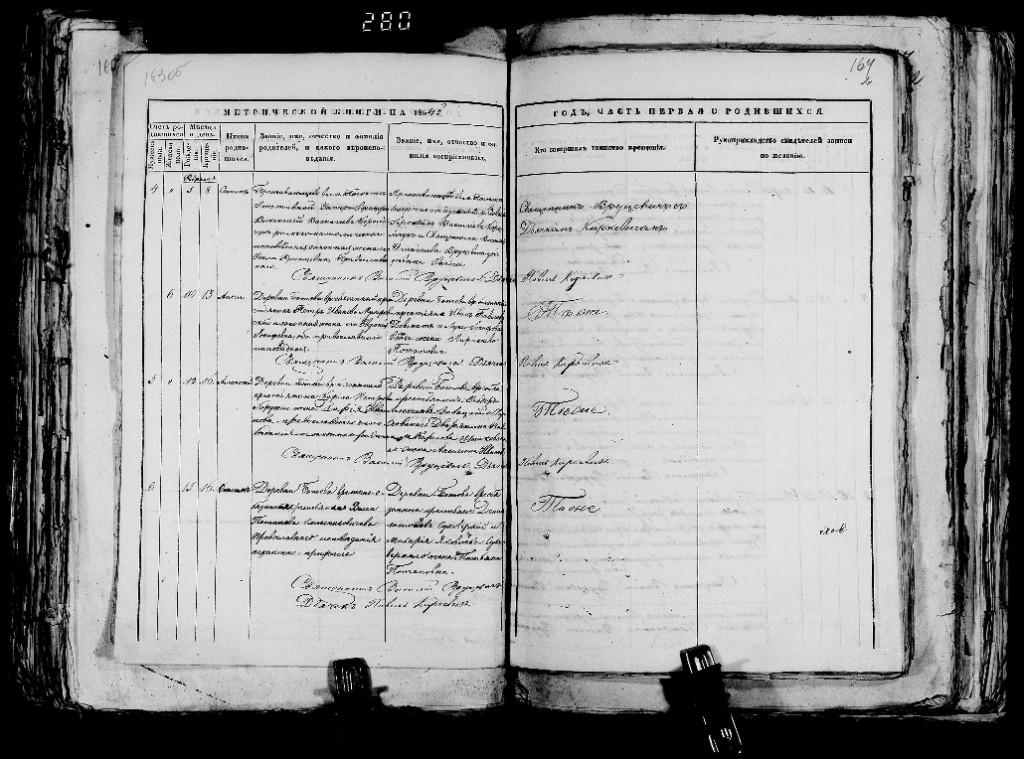
Sale of land in Kopeynoye, Igumen uyezd; move to Laby, Minsk uyezd; purchase of a holding for all sons of a large family.
Left — 1864 parish entry (Khoruzhko / Oles). Centre — Vazhnik path: Drichin → Kopeyno (1810) → Laby (1914) → Minsk (early 1950s). Right — report fragment: horizon, timeline, story.
Start with a small task and continue when new documents and hypotheses appear.
First step
from €300
When you do not yet know which archive, fond or document type to search for your ancestor.
Core research
from €1 500
Deep research on one line — about 100 years and further as sources allow.
Payment 50/50. Archive fees billed separately.
Larger story
from €5 500
Comprehensive research across several branches with a family chronicle.
Payment 40/30/30. Archive fees billed separately.
Genealogy cannot be priced only by how many people sit in a tree. Region, period, record survival, number of archives, search difficulty and branch count all matter. After we see your starting facts we propose a concrete plan and budget. We guarantee method and sources — not “N generations at any cost.”
First cohort: −20% for two projects ↔ detailed feedback + an anonymised case study.
That is not the end. We use indirect sources: revision lists, censuses, court and land files, relatives’ papers, military and other fonds. See also the article on missing parish books.
No. A name, approximate year, place and a few known relatives are often enough.
Common in historical records. We account for spelling variants, document language, parish practice and period.
Yes — that is what the one-line package is for. Collateral branches can be added later by agreement.
Yes. Most work is remote; deliverables are digital (report, documents, research log).
You do not need to know the archive, fond or exact surname spelling in advance. Send everything known, and we will help define the next step.
Discuss my family history